Showing posts with label the king of tars. Show all posts

Sunday, April 9, 2017

A Princess in Half Moon Bay


The Princess in The King of Tars is revolutionary, in a Western lens, for staying true to Christianity. Big Little Lies, an HBO series adaptation, is also revolutionary for discussing current day gender issues that are normally overlooked. The two fictional plots are similar in how women are treated as commodities in the eyes of men; however, they differ in the progression of women’s power.

           
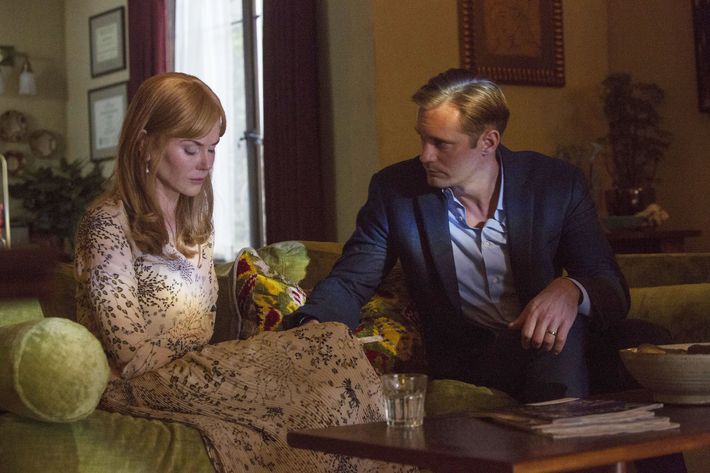
Women have been characterized as a commodity since the medieval period. In The King of Tars, the sultan of Damascus wants to marry the Princess of Tars solely based on her rumored beauty. After the Kingdom of Tars was surrounded by the sultan, the Princess agreed to marry the sultan. Even though the Princess decided to become a peaceweaver, her choice was already decided by the King of Tars because he would have married her off anyways. In a similar situation, the mothers in Big Little Lies gave up their careers for their family. Celeste, played by Nicole Kidman, was a successful lawyer who gave up her career, home, and family ties to be with Perry, played by Alexander Skarsgard. Perry degrades Celeste through verbal and physical assault. Everyone in Half Moon Bay, where the series takes place, views Celeste and Perry as the perfect couple. Celeste no longer feels independent because Perry wants to mold her into his ideal wife. The Princess and Celeste are not seen as humans but rather as meaningful property.


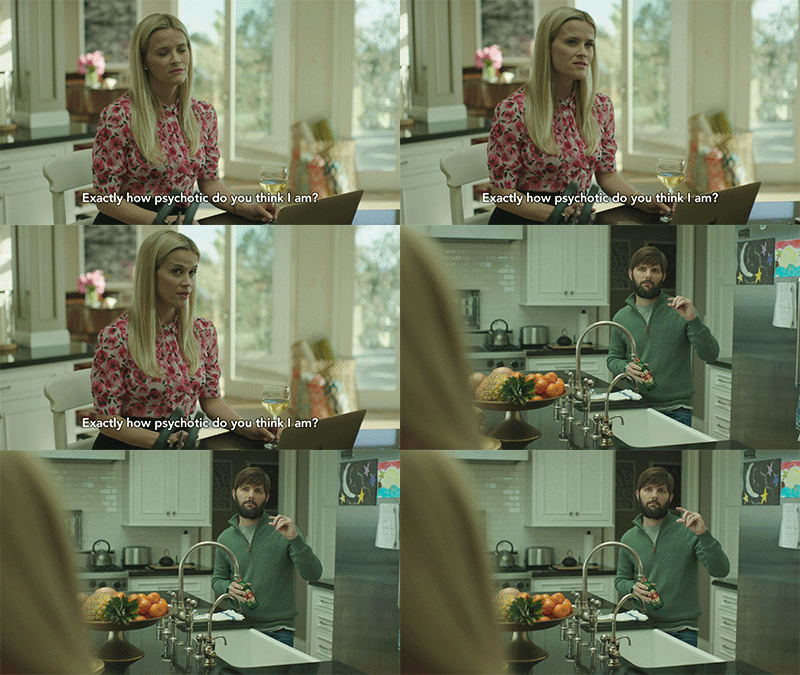
            Since the medieval period, women’s power has progressed tremendously. The Princess of Tars secretly kept her Christian faith, instead of truly committing to the sultan by converting. The Princess challenges the sultan to change their lump baby into a regular child and whoever won deemed their religion superior. It resulted in the sultan having to convert to Christianity since the Princess won. Even though the Princess had to stay with the sultan, she went beyond her defined role of domesticity to challenge her husband. In medieval context, her actions were radical but she set the stage for women’s emerging dominance. In Big Little Lies, Madeline, played by Reece Witherspoon, exemplified the power women can have. Madeline went to great lengths to protect their local community production from Renata, played by Lauren Dern, and the mayor shutting it down for being controversial. Madeline also fought against Renata in the principal’s office because Renata wants to suspend a child who was wrongfully accused of being a bully towards her daughter. Madeline shows how even as a housewife, women’s power cannot be limited by social constraints. From the start of the season, Madeline has evoked mothers to channel to the power that they thought they have lost. The evolution of women’s power can be seen from the Princess of Tars challenging the sultan to Madeline vocalizing her opinion to powerhouses in Half Moon Bay.  

            Women have been tagged as commodities from as far back as the medieval age to the present. The sultan views the Princess of Tars only for her beauty and used her as a peaceweaver. Perry views Celeste as a perfect housewife that can be molded into his ideal image. However, The King of Tars allowed for present women to identify their true strength, which is showcased in Big Little Lies.

Tuesday, December 1, 2015


Women in the Medieval Time Period

Women who follow to the “normal” roles of wives, mothers, and peace weavers generally appear as confined and content. Even though they have no control and put into a submissive role against their will, the confined woman of medieval literature appears perfectly happy and gracious to live in such a role. Women in medieval literature is not dangerous and poses no threat to the male power structure. Such as King of Tars and Game of Thrones offers a clear example of a women’s role. Both of these works shows certain ideas about the role of the medieval woman and what her interactions with men should be. In a Game of Thrones Daenerys is dressed to catch the eyes of men, one in particular, and is put in weird almost a childlike role with her brother. Her brother uses her as an object to get what he wants, to reclaim his throne. Also when she is pregnant with “the stallion that mounts the throne,” she is only seen as an object, just as the career of the baby, forgetting that half of the baby’s genetic makeup is hers. In the King of Tars a Sultan demanded the hand of the Christian princess. The king refuses and the Sultan and his army attacks the Christians. The Christian princess was forced to leave her home and go with the Sultan. Again the women were used as only objects to settle disagreements and as a bargaining tool between two different races, or religious groups. Also in both of these books the women were fair and every beautiful. Saying that fair and super white is more desirable than any other skin tone. So basically women were seen to be trophy wives and to bear children.      

Zara Robinson